Taoist Sexology, or fangzhong shu, encompasses ancient Chinese traditions integrating disciplined sexual practices for health, longevity, and spiritual growth.
These “arts of the bedchamber” focus on cultivating qi and jing, with roots stretching back approximately 8,000 years, as described by Master Mantak Chia.
Historical Context of Taoist Sexual Practices
Taoist sexual practices boast a remarkably long history, potentially originating as far back as 8,000 years ago in ancient China. This lineage evolved organically, stemming from diverse philosophical and religious currents rather than a singular founder or definitive date.
Early development intertwined with Chinese medicine, viewing sexual energy – jing – as vital life force. Over millennia, these practices, known as fangzhong shu, were refined and documented, sometimes facing criticism or partial acceptance from various Taoist schools. The historical record reveals a complex interplay between embracing and denouncing these intimate arts.
The Philosophical Foundations of Taoist Sexuality
Taoist sexuality is deeply rooted in the core principles of Taoism, emphasizing harmony, balance, and the cultivation of vital energy. Central to this is the concept of qi, the life force that flows through all things, and jing, considered essential essence.
These practices aren’t merely about physical pleasure; they aim to transform sexual energy into spiritual growth. Taoist thought views sexuality as a natural and sacred aspect of existence, offering a pathway to enhanced health, well-being, and a deeper connection to the universal Tao.
Core Principles of Taoist Sexology
Taoist Sexology centers on balancing yin and yang, cultivating qi (life force), and preserving jing (essence) through mindful sexual practices.
Yin and Yang in Sexual Union
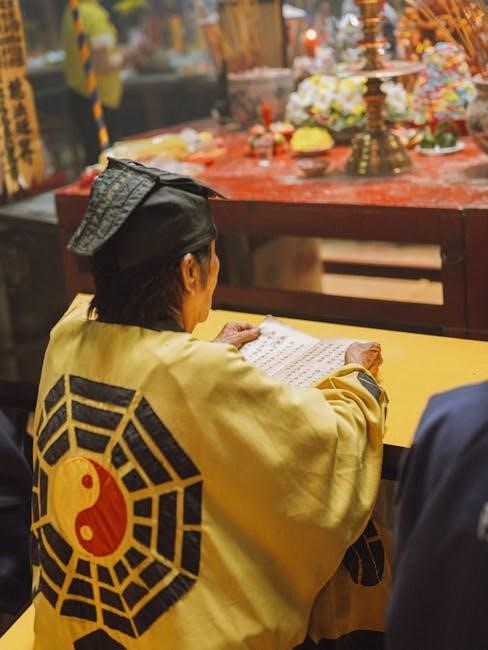
Taoist Sexology views sexual union as a powerful opportunity to harmonize yin and yang energies within both partners. Yin, often associated with the feminine, represents receptivity and coolness, while yang, typically masculine, embodies activity and warmth.
Successful practice isn’t about dominance, but about achieving a dynamic equilibrium. The goal is to circulate these energies, preventing stagnation and fostering a profound connection. Techniques aim to balance arousal levels, ensuring neither partner overwhelms the other. This balanced exchange cultivates vitality and deepens intimacy, moving beyond mere physical pleasure to a holistic experience.
The Importance of Qi (Life Force)
Qi, often translated as “life force” or “vital energy,” is central to Taoist Sexology. Sexual activity, when approached consciously, isn’t simply physical; it’s a potent means of cultivating and circulating qi throughout the body. Unlike conventional approaches, Taoist practices emphasize retaining and redirecting this energy, rather than solely focusing on release.
This conservation builds jing (essence), enhancing vitality and longevity. Techniques like breathwork and specific postures are employed to gather, store, and move qi, transforming sexual energy into a source of profound healing and spiritual awakening.
Cultivating Jing (Essence)
Jing, often referred to as “essence,” is considered a foundational energy in Taoist Sexology, deeply linked to vitality, longevity, and reproductive health. It’s believed to be a finite resource, depleted by excessive or uncontrolled sexual activity. Taoist practices prioritize conserving and replenishing jing through specific techniques.
These methods involve mindful sexual engagement, breath control, and internal alchemy, aiming to transform sexual energy back into jing. Strengthening jing isn’t merely about sexual prowess; it’s about nourishing the root of life itself, fostering overall well-being and spiritual development.
Key Techniques in Taoist Sexology
Taoist Sexology utilizes diverse techniques – the Microcosmic Orbit, Sexual Kung Fu, prolonged union practices, and multiple ejaculation – to cultivate and circulate vital energy.
The Microcosmic Orbit
The Microcosmic Orbit is a foundational Taoist practice involving circulating qi (life force) through the energetic pathways of the body, specifically the Governing and Conception Vessels.
This circulation, achieved through specific breathing and visualization techniques, aims to harmonize yin and yang, strengthen jing (essence), and promote overall health. It’s considered a core component of many Taoist sexual practices, preparing the body for deeper energetic work.
Practitioners visualize qi ascending and descending, creating a continuous loop that revitalizes organs and enhances sexual energy. Mastering this orbit is crucial for advanced techniques.
Sexual Kung Fu: Foundational Exercises
Sexual Kung Fu encompasses a series of exercises designed to strengthen the pelvic floor muscles, enhance qi circulation, and cultivate control over sexual energy. These foundational practices are essential before attempting more advanced Taoist sexual techniques.
Exercises often include perineum contractions (kegels), specific breathing patterns, and gentle movements to awaken and tonify the sexual organs. The goal isn’t simply physical strength, but energetic awareness and control.
Consistent practice builds stamina, deepens sensitivity, and prepares the body for the art of prolonging intimacy.
The Art of Prolongation
The Art of Prolongation, a cornerstone of Taoist sexology, isn’t about delaying orgasm for the sake of it, but about expanding awareness and deepening connection during sexual union. It involves cultivating control over arousal through specific breathing techniques and mindful muscle engagement.
Practitioners learn to circulate qi, transforming sexual energy into vital life force rather than expending it rapidly. This refined control enhances pleasure for both partners and fosters a profound energetic exchange.
It’s a skill developed through dedicated practice and intention.
Multiple Ejaculation Techniques
Multiple Ejaculation Techniques within Taoist Sexology aren’t focused on sheer quantity, but on skillfully managing and circulating jing – essential life essence. The goal is to transform sexual energy into higher states of consciousness and vitality, rather than depletion.
These techniques involve precise control of the pelvic floor muscles, coupled with specific breathing exercises, to repeatedly contract and release without complete exhaustion.
This practice aims to refine and strengthen the body’s energetic systems, enhancing overall health and well-being.
Female Taoist Sexual Practices
Female Taoist Sexual Practices emphasize cultivating and harnessing qi through specific exercises and awareness of the body’s energetic pathways. Unlike solely male-focused approaches, Taoist sexology recognizes the woman’s vital role in energetic exchange.
Techniques involve strengthening pelvic floor muscles, learning to draw energy upwards, and cultivating a deep connection with one’s own sensuality.
The “Jade Fountain” – a poetic term for the vagina – is viewed as a powerful center for receiving and transforming energy, crucial for both individual and partnered practice.
Anatomical Understanding in Taoist Sexology
Taoist Sexology utilizes poetic anatomical terms like “Jade Fountain” for the vagina, viewing sexual organs not merely physically, but as energetic centers within the body.
Poetic Names for Sexual Organs (Jade Fountain, etc.)
Taoist Sexology diverges significantly from Western clinical terminology when describing sexual anatomy, employing instead a rich tapestry of poetic and evocative names. The vagina, for instance, is often referred to as the “Jade Fountain,” symbolizing purity, life-giving energy, and a source of profound pleasure.
Breasts are affectionately called “Twin Peaks” or “Jade Mountains,” highlighting their nurturing and sensual qualities. This linguistic approach isn’t merely aesthetic; it reflects a deep reverence for the body and its functions, fostering a loving and respectful attitude towards sexual energy. These terms aim to elevate the experience beyond the purely physical, connecting it to spiritual and energetic realms.
Mapping Energy Channels in Sexual Anatomy
Taoist Sexology doesn’t view sexual organs in isolation but as integral nodes within a complex network of energy channels, or meridians. These channels, central to Traditional Chinese Medicine, govern the flow of qi (life force) throughout the body. Specific points along these meridians, particularly those near the genitals, are considered crucial for cultivating and circulating sexual energy.
Understanding this energetic map allows practitioners to enhance sexual experiences and promote overall well-being. Techniques aim to open and balance these channels, facilitating a harmonious flow of qi, leading to increased vitality and spiritual connection.

The Role of Breathwork in Taoist Sexology
Breathwork is fundamental, synchronizing respiration with sexual activity to enhance qi circulation and deepen connection. Controlled breathing cultivates energy and awareness.
Breathing Techniques for Enhancing Qi
Taoist sexology emphasizes specific breathwork to amplify qi (life force) during sexual practice. The foundational technique involves deep, diaphragmatic breathing, drawing energy from the lower dantian – the energy center located below the navel.
This “abdominal breathing” promotes relaxation and increases circulation. Practitioners often employ “reverse breathing,” subtly inverting the natural breathing pattern to further cultivate and direct qi. These techniques aren’t merely preparatory; they are integral to the experience, enhancing sensitivity and prolonging intimacy. Consistent practice builds a reservoir of vital energy.
Synchronizing Breath with Sexual Activity
Taoist sexology advocates for precise synchronization of breath with each stage of sexual union, transforming it into a meditative practice. Couples coordinate inhalations and exhalations, fostering a deeper energetic connection.
Slow, deliberate breathing amplifies sensations and promotes emotional intimacy. As arousal builds, breath may become more focused on the dantian, circulating qi. During climax, controlled exhalations help retain energy, preventing depletion. This mindful approach elevates sexual activity beyond mere physical release, cultivating profound spiritual benefits.

Variations and Schools of Taoist Sexology
Taoist Sexology exhibits diverse lineages and approaches, ranging from religious Taoist practices—sometimes partial acceptance—to entirely secular techniques focused on energy cultivation.
Different Lineages and Approaches
Taoist Sexology isn’t monolithic; numerous lineages and schools developed over millennia, each with unique emphases and techniques. Some approaches, deeply rooted in religious Taoism, cautiously integrate sexual practices, viewing them as potentially disruptive to spiritual progress if not approached with reverence and discipline.
Conversely, secular lineages prioritize the physiological and energetic benefits, focusing on cultivating qi and jing for health and longevity. These schools often emphasize practical exercises like Sexual Kung Fu and the Microcosmic Orbit, offering detailed guidance on breathwork and anatomical understanding. Variations also exist in the degree of emphasis placed on male versus female practices, reflecting differing interpretations of Yin and Yang dynamics.
Religious Taoism vs. Secular Practices
A key distinction within Taoist Sexology lies between religious and secular applications. Religious Taoism often views intense sexual activity as potentially hindering spiritual cultivation, advocating moderation and sublimation of energies for alchemical transformation. Some schools partially accept practices, emphasizing mindful intention and ritual purity.
Secular lineages, however, prioritize the tangible health benefits – increased vitality, enhanced sexual function, and improved well-being – derived from techniques like Sexual Kung Fu. They focus on energetic principles and anatomical understanding, often downplaying the explicitly religious context. This divergence reflects differing priorities: spiritual transcendence versus physical and energetic optimization.
Historical Development and Evolution
Taoist Sexology’s origins trace back roughly 8,000 years in ancient China, evolving through various philosophical and religious traditions, lacking a singular founder or date.
Origins Dating Back 8,000 Years
Taoist Sexology’s remarkably ancient roots are often cited as extending back approximately 8,000 years within the rich tapestry of ancient Chinese history and spiritual practices. Master Mantak Chia, a prominent figure in the field, frequently references this timeframe, suggesting a continuous lineage of knowledge passed down through generations.
This longevity implies a gradual development and refinement of techniques, interwoven with the evolving understanding of qi (life force), jing (essence), and the interconnectedness of body, mind, and spirit. Early practices likely emerged from shamanic traditions and observations of nature, gradually formalizing into the sophisticated system known today.
Influence of Chinese Medicine
Taoist Sexology is deeply intertwined with the principles of Traditional Chinese Medicine (TCM), viewing sexual energy as a vital component of overall health and well-being. TCM’s emphasis on balancing yin and yang, and the free flow of qi through meridians, directly informs Taoist sexual practices.
Techniques aim to nourish jing (essence), considered fundamental to longevity, and to prevent its depletion through mindful sexual engagement. Concepts like the Kidney’s role in storing jing, and the importance of tonifying these organs, are central to the Taoist approach, mirroring TCM diagnostics and treatments.

Comparison with Other Sexual Practices
Taoist approaches differ from conventional sex by prioritizing energy cultivation, mindful connection, and prolonged intimacy, rather than solely focusing on orgasm as the ultimate goal.
Taoist Thrusting vs. Conventional Sex
Taoist thrusting diverges significantly from typical Western sexual practices, emphasizing a slow, deliberate, and deeply connected approach. Unlike conventional sex often geared towards rapid climax, Taoist techniques prioritize the circulation of qi (life force) and the cultivation of jing (essence).
The movements are gentle, rhythmic, and focused on mutual sensation, often involving the “locking” of energies rather than forceful penetration. This mindful engagement aims to prolong intimacy, deepen emotional connection, and enhance overall well-being, transforming sexual union into a spiritual practice.
Contrasting Approaches to Sexual Energy
Conventional approaches often view sexual energy as primarily for procreation or release, frequently culminating in orgasm as the ultimate goal. Taoist sexology, however, perceives sexual energy – jing – as a vital life force, precious and to be cultivated, not simply expended.
Instead of solely seeking climax, Taoist practices emphasize circulating, transforming, and even sublimating this energy to nourish the body, mind, and spirit. Techniques like the Microcosmic Orbit aim to refine jing into qi and ultimately into shen (spirit), fostering longevity and enlightenment.
Potential Benefits of Taoist Sexology
Taoist Sexology offers increased sexual vitality, enhanced spiritual connection, and improved overall health through mindful practices cultivating and circulating life-enhancing sexual energy.
Increased Sexual Energy and Vitality
Taoist Sexology fundamentally aims to amplify sexual energy, viewing it not merely as pleasure, but as a potent life force – qi – crucial for overall well-being. Techniques like Sexual Kung Fu and the Microcosmic Orbit are designed to strengthen the body and enhance circulation.
By learning to retain and circulate jing (essence), practitioners experience heightened sensitivity, prolonged enjoyment, and a deeper connection with their bodies. This isn’t about performance, but about cultivating a vibrant, sustainable energy that permeates all aspects of life, fostering vitality and longevity.
Enhanced Spiritual Connection
Taoist Sexology transcends purely physical experience, viewing sexual union as a path to profound spiritual connection. The mindful cultivation and circulation of qi during intimate practice can unlock higher states of consciousness and foster a deeper understanding of oneself and one’s partner.
By embracing the principles of Yin and Yang, practitioners aim to achieve harmony and balance, not just within the body, but also within their spiritual selves. This practice is seen as a sacred act, a merging of energies that can lead to enlightenment.
Improved Overall Health and Well-being
Taoist Sexology isn’t solely about sexual enhancement; it’s a holistic system promoting overall health and well-being. The techniques, focused on qi cultivation and jing conservation, are believed to strengthen the body, boost vitality, and improve longevity.
By harmonizing energies and addressing imbalances, practitioners may experience enhanced immune function, reduced stress, and increased emotional stability. This ancient practice acknowledges sexuality as a vital force, integral to a flourishing life, moving beyond puritanical views.
Criticisms and Misconceptions
Taoist Sexology often faces criticism due to puritanical viewpoints and resulting misconceptions about its practices, frequently misconstrued as solely focused on sexual performance.
Addressing Puritanical Views
Taoist Sexology frequently encounters resistance stemming from deeply ingrained puritanical beliefs regarding sexuality, often viewing it as inherently sinful or solely for procreation. This perspective clashes with the Taoist understanding of sexual energy – jing – as a vital life force crucial for health and spiritual development.
The Western, and sometimes Eastern, discomfort with openly discussing and exploring sexuality contributes to misunderstandings. Taoist practices aren’t about indulgence, but disciplined cultivation and transmutation of energy. Overcoming these views requires education and a shift in perspective, recognizing sex as a natural and potentially transformative aspect of the human experience.
Debunking Myths About Taoist Sexuality
Several misconceptions surround Taoist Sexuality, often portraying it as solely focused on multiple orgasms or acrobatic sexual positions. This is a significant oversimplification; the core isn’t about performance, but about cultivating a deep connection with one’s own energy and that of a partner.
Another myth suggests it’s solely for men. Female Taoist practices are equally vital, focusing on harnessing and circulating qi. It’s also untrue that it requires exceptional physical ability; foundational exercises build strength and awareness gradually. The aim is holistic well-being, not mere sexual prowess.
Resources for Further Study
Explore recommended texts by Mantak Chia and other respected teachers to deepen your understanding. Seek reputable online sources for accurate information on these ancient practices.
Recommended Texts and Teachers
Master Mantak Chia stands as a pivotal figure, offering comprehensive guides like “The Multi-Orgasmic Man” and “Healing Light of the Tao,” detailing foundational exercises and techniques. Eva Wong’s works, including translations of classic Taoist texts, provide valuable philosophical context.
For a deeper dive into anatomical understanding, explore resources referencing poetic names like “Jade Fountain.” Seek instruction from certified instructors within established lineages to ensure proper guidance and avoid misinterpretations. Online platforms can supplement learning, but prioritize verified sources and experienced teachers for authentic practice.
Finding Reputable Information Online
Navigating online resources requires discernment, as misinformation abounds. Prioritize websites affiliated with established Taoist lineages or recognized teachers like Master Mantak Chia. Beware of sensationalized content or promises of instant results; authentic practice demands dedication and proper guidance.
Look for sites offering detailed explanations of qi cultivation and jing conservation, avoiding those solely focused on physical techniques. Cross-reference information with multiple sources and critically evaluate the author’s credentials. Authentic resources will emphasize the spiritual and health benefits alongside the physical aspects.